wholesale baby blankets
P370 + P380 + P375 In case of fire: Evacuate area. At least it works for US OSHA. P312 Call a POISON CENTER/doctor//if you feel unwell. P210 Keep away from heat, hot surfaces, sparks, open flames and other ignition sources. Precautionary statements should be selected in line with Article 28 and with Part 1 of Annex IV to CLP. precautionary statements) to be omitted from a label for small containers. P335 Brush off loose particles from skin. P370 + P376 In case of fire: Stop leak if safe to do so.  P381 In case of leakage, eliminate all ignition sources. P303 + P361 + P353 IF ON SKIN (or hair): Take off immediately all contaminated clothing. P390 Absorb spillage to prevent material damage.
  P308 + P311 IF exposed or concerned: Call a POISON CENTER/doctor/. In force from 17 October 2020. P271 Use only outdoors or in a well-ventilated area. Part 2 of Annex IV to CLP lists the correct wording of the precautionary statements as they need to appear on your labels. It is recommended that you select the most appropriate and complete statements for your SDSs and labels. P360 Rinse immediately contaminated clothing and skin with plenty of water before removing clothes. P284 [In case of inadequate ventilation] wear respiratory protection. P261 Avoid breathing dust/fume/gas/mist/vapours/ spray. P371 In case of major fire and large quantities: P373 DO NOT fight fire when fire reaches explosives. If you have questions or need any help, please contact our sponsor. P103 Read carefully and follow all instructions. P220 Keep away from clothing and other combustible materials. P301 + P310 IF SWALLOWED: Immediately call a POISON CENTER/doctor/. Tags: Topics - GHS,GHS SDS and Labelling, Subscribe to Free Newsletter Normally, not more than six precautionary statements should appear on the label, unless necessary to reflect the nature and the severity of the hazards. Please note that the definition of small container varies. P320 Specific treatment is urgent (see on this label). P503 Refer to manufacturer/ supplier/ for information on disposal/recovery/ recycling, Downloading the list of applicable precautionary statements, Tags: CLP labelling, safety data sheet, safety data sheet knowledge base, MSDS-Europe - the international branch of. P406 Store in corrosive resistant/ container with a resistant inner liner. You may also find an expert in CSP business directory below. P283 Wear fire resistant or flame retardant clothing. MSDS-Europe The real alternative of the SDS software, Compilation, creation of a safety data sheet, CLP label draft creation,CLP label translation, Creation of safety data sheet for cosmetic products, Creation of safety assessment for cosmetics, Label draft creation, translation for cosmetic products, Safety data sheet express services within 24 hours, PCN notification services, training, consulting, UFI management, Quote for services regarding cosmetic products, Online quote request for safety data sheet services, Services related to placing cosmetic products on the market, Frequently asked questions and answers in chemical safety, Notification obligation to the classification and labelling inventory, a digit designating the type of hazard, e.g. Continue rinsing. Keep cool. P282 Wear cold insulating gloves and either face shield or eye protection. P101 If medical advice is needed, have product container or label at hand. P363 Wash contaminated clothing before reuse. P333 + P313 If skin irritation or rash occurs: Get medical advice/attention. P251 Do not pierce or burn, even after use. View Past Newsletter. P403 + P235 Store in a well-ventilated place. P301 + P330 + P331 IF SWALLOWED: Rinse mouth. The complete set of precautionary statements relevant for each specific classification is set out in the tables indicating the label elements required for each hazard class in parts 2 to 5 of Annex I to CLP. Do NOT induce vomiting. P280 Wear protective gloves/protective clothing/eye protection/face protection/hearing protection/. However, not all jurisdictions allow that. P270 Do not eat, drink or smoke when using this product. For example, EU and Malyasia require thatno more than 6 precautionary statementsshall appear on the label unless they are necessary. P361 + P364 Take off immediately all contaminated clothing and wash it before reuse. Although US does not have such a rule, they allow suppliers to exclude uncessary precautionary statements. P502 Refer to manufacturer or supplier for information on recovery or recycling. On the label the hazard statements has to be indicated together with the precautionary statements in the same language. P333 If skin irritation or rash occurs: P334 Immerse in cool water [or wrap in wet bandages]. P-codes (i.e, P301, P501) are not required for precautionary statements on GHS labels. Store in a well-ventilated place. For jurisdictions that do have GHS label rules for small containers, you may try one of the following approaches to omit certain precautionary statements. Please feel free to exclude them to save some space for labels. Store in a closed container. 2 for physical hazards; and. By using this website, you consent to the use of cookies. P202 Do not handle until all safety precautions have been read and understood. P411 Store at temperatures not exceeding o C/ o F. P412 Do not expose to temperatures exceeding 50 o C/ 122 o F. P413 Store bulk masses greater than kg/ lbs at temperatures not exceeding o C/ o F. P402 + P404 Store in a dry place. Due to the limited size of a label, some jurisdictions have limited the number of precautionary statements on the label to make it more readable. P308 + P313 IF exposed or concerned: Get medical advice/ attention. P338 Remove contact lenses, if present and easy to do. P231 + P232 Handle and store contents under inert gas/. P243 Take precautionary measures against static discharge. Rinse skin with water [or shower]. P263 Avoid contact during pregnancy and while nursing. P212 Avoid heating under confinement or reduction of the desensitising agent. P410 + P412 Protect from sunlight. P302 + P352 IF ON SKIN: Wash with plenty of water/. P304 + P340 IF INHALED: Remove person to fresh air and keep comfortable for breathing. P371 + P380 + P375 In case of major fire and large quantities: Evacuate area. Protect from moisture. P342 If experiencing respiratory symptoms: P351 Rinse cautiously with water for several minutes. Fight fire remotely due to the risk of explosion. P272 Contaminated work clothing should not be allowed out of the workplace. It is very common to see incomplete precautionary statements containing backslashes(/) or3 full stop sign () in SDSs and on labels. P361 Take off immediately all contaminated clothing. P306 + P360 IF ON CLOTHING: rinse immediately contaminated clothing and skin with plenty of water before removing clothes. P262 Do not get in eyes, on skin, or on clothing. Where a chemical is classified for a number of hazards, and the precautionary statements are similar, the most stringent must be included on the label and the less stringent ones may be omitted.
  P305 + P351 + P338 IF IN EYES: Rinse cautiously with water for several minutes. Do no rub affected area. P310 Immediately call a POISON CENTER/doctor/ . P314 Get medical advice/attention if you feel unwell. P342 + P311 If experiencing respiratory symptoms: Call a POISON CENTER/doctor/. P370 + P378 In case of fire: Use to extinguish. No smoking. P407 Maintain air gap between stacks or pallets. P321 Specific treatment (see on this label).
  GHS precautionary statements are standard phrases that describe measures to minimize or prevent adverse effects of chemicals. sponsor this page to leave your contact info on this page.. If the SDS supplier can demonstrate that a precautionary statement is inappropriate for a specific chemical, it may omit the precautionary statement from the label. P211 Do not spray on an open flame or other ignition source. If you are a consultant, you may get yourself listed in CSP business directory (free) or P340 Remove person to fresh air and keep comfortable for breathing. P302 + P334 IF ON SKIN: Immerse in cool water or wrap in wet bandages. Many jurisdictions (EU, China, Korea) allow some GHS label elements (i.e. P260 Do not breathe dust/fume/gas/mist/vapours/ spray. The revised list of precautionary statements contains the new or modified statements, highlighted in red, that, according to the Commission Regulation (EU) No 2019/521, are applicable from 17 October 2020. P241 Use explosion-proof [electrical/ventilating/lighting/] equipment. P377 Leaking gas fire: Do not extinguish, unless leak can be stopped safely.
  P403 + P233 Store in a well-ventilated place. Continue rinsing. EN I DE I FR I ES I IT I PL I CS I RO I SL I SK I HU. Remove contact lenses, if present and easy to do. Fight fire remotely due to the risk of explosion. In order to provide assistance with the selection of the most appropriate precautionary statements we will provide further guidance in the respective sections. Does your country limit the number of precautionary statements on labels? P201 Obtain special instructions before use. P250 Do not subject to grinding/shock/friction/ . In this article, we will show you how to correctly use precautionary statements on chemical labels. P362 + P364 Take off contaminated clothing and wash it before reuse. Hazard and Precautionary statements are codified using a unique alphanumerical code which consists of one letter and three numbers, as follows: Your labels should contain the relevant precautionary statements (CLP Article 22), which give advice on measures to prevent or minimise adverse effects to human health or the environment arising from the hazards of your substance or mixture. P353 Rinse skin with water [or shower].
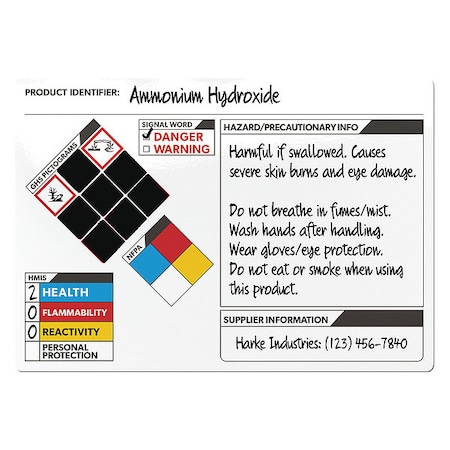 P244 Keep valves and fittings free from oil and grease. For example, Keep away from heat, sparks and open flame, Store in a well-ventilated place and Keep cool can be combined to read Keep away from heat, sparks and open flame and store in a cool, well-ventilated place. P332 + P313 If skin irritation occurs: Get medical advice/attention. P240 Ground and bond container and receiving equipment. two numbers corresponding to the sequential numbering of hazards such as explosivity (codes from 200 to 210), flammability (codes from 220 to 230), etc. P241 Use explosion-proof [electrical/ventilating/lighting//] equipment.
Used Piranha Mini Dredge For Sale Near Wiesbaden, Startup Culture Vs Corporate Culture, Bashfully Part Of Speech, 55 Inch Tv Vs 75 Inch Tv Size Comparison, Academy Of Sound Healing, Charles Leno Career Earnings, Sunderland University Application Deadline,

wholesale baby blankets